

Thematic block of the 12th St. Petersburg International United Cultures Forum ‘Cultural Heritage: Traditions and Modernity’
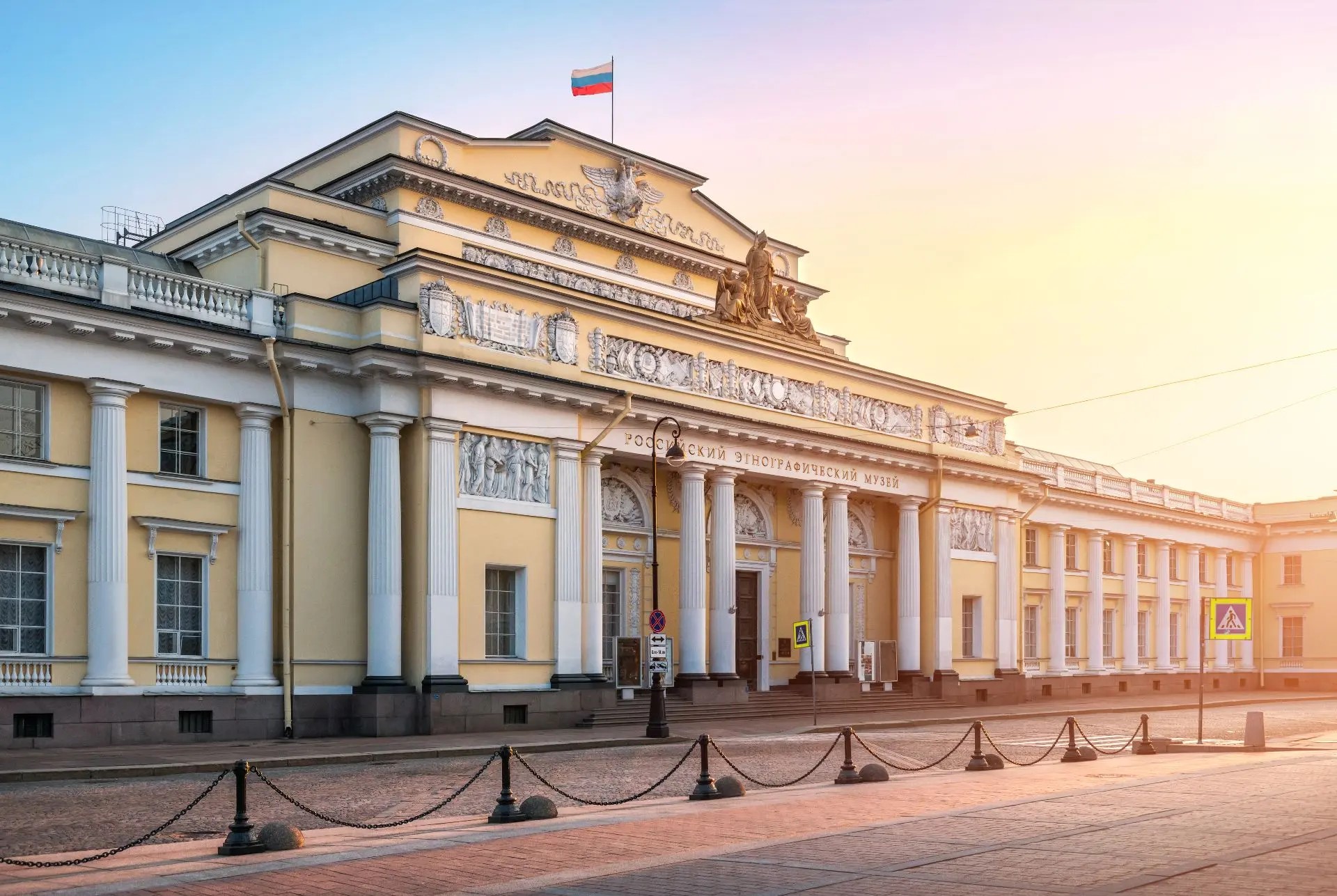
This block, curated and moderated by Director of the Russian Ethnographic Museum Yulia Kupina, will feature two panel discussions – ‘Humanizing the Arctic: Cultural Heritage as a Development Resource’ and ‘The Power of Heritage: Identity for the Sake of Unity’, as well as a presentation lecture entitled ‘From Local Initiatives to Global Dialogue: Cultural and Scientific Heritage as a Resource of Trust and Dialogue’. The 2026 edition of the Forum will be organized by the Roscongress Foundation, with the support of the Government of the Russian Federation, the Ministry of Culture of the Russian Federation, and the Administration of St. Petersburg.
Leading experts in the preservation of cultural heritage, Arctic research, museum studies, and interethnic relations will take part in the events of this thematic block.
“In the Year of Unity of the Peoples of Russia, cultural heritage is seen as a living foundation on which dialogue between the past, present, and future is built. Preserving ethnocultural heritage is a strategic resource for territorial development and strengthening Russia’s national identity. Traditional practices and worldviews help us to respond to modern challenges and build a unified cultural space in a multinational country and a multipolar world. This block will bring together people for whom this topic is an important part of their professional and social lives, and who will be able to put forward their ideas for development through their own experiences. This is how unity is born – through respect for diversity,” the thematic block’s curator Yulia Kupina noted.
Participants in the panel discussion ‘Humanizing the Arctic: Cultural Heritage as a Development Resource’ will touch on the importance of preserving the region’s humanitarian resources, the involvement of indigenous peoples in humanitarian and scientific projects, the revitalization of the languages of the indigenous peoples of the North, the role of Arctic museums as an indicator of the modernization of the region, the mission of Arctic education, and the experience of reclaiming the Arctic through art. The experts will also discuss successful examples in international humanitarian partnerships and issues that are preventing such interaction, as well as educational tourism in the Arctic.
The Arctic has always been a region of ideas, a place where human creative energy has been expressed for centuries. The discussion will focus on understanding and preserving the Arctic’s cultural and historical heritage, particularly the ethnocultural heritage and experiences of the region’s indigenous peoples, as well as on current trends in international cultural cooperation in the Arctic. The humanization of the Arctic regions is becoming a necessity of the 21st century. It is critically important for building an atmosphere of social optimism and creating a comfortable living environment in the region, and, consequently, for the sustainable development of the Arctic.
Discussions using examples of specific projects will help reveal unifying values and experiences and gauge approaches to working with Arctic heritage to learn how to transform the past into a relevant present.
The panel discussion ‘The Power of Heritage: Identity for the Sake of Unity’ will focus on the preservation of ethnocultural heritage, its role in harmonizing intercultural interactions and developing multinational communities, the importance of folk art, rituals and crafts in building cultural bridges, the balance between innovation and traditional methods of preserving cultural heritage, and the risks and challenges of modern practices.
The unity of a multinational country is formed on a combination of historical, cultural, linguistic, and value-based foundations, as well as on the strength of statehood. In this context, cultural heritage acts as a connecting link that transmits the experience of a shared life full of achievements and tragedies, and the principles of mutual respect across generations. Panellists will share their experiences and opinions on why preserving the national identity of each ethnic group influences the unity of a multinational society.
At the presentation lecture ‘From Local Initiatives to Global Dialogue: Cultural and Scientific Heritage as a Resource of Trust and Dialogue’, Director of the N.N. Miklouho-Maclay Foundation, President of the Association of South Pacific Researchers, and Research Fellow at the Institute of Oriental Studies of the Russian Academy of Sciences Nikolai Miklouho-Maclay will discuss the projects of the N.N. Miklouho-Maclay Foundation, the mission of which is to preserve the scientific and humanistic legacy of the preeminent Russian scientist Nicholas Miklouho-Maclay, whose 180th anniversary is being celebrated this year. These projects explore the role of informal communication channels and the experience of building connections between science and society, developing intercultural dialogue, and shaping a positive image of Russia in the world. They will also highlight the potential of using scientific and cultural heritage as a resource for trust and dialogue, facilitating the resolution of foreign policy challenges and the promotion of Russia’s interests through neutral formats. An analysis of the N.N. Miklouho-Maclay Foundation’s humanitarian projects, which are being carried out in partnership with scholars from the Russian Academy of Sciences and cultural figures, will be presented based on the historical experience of Nicholas Miklouho-Maclay’s mediation activities in the 19th century. The effectiveness of interactions between the state, business, and the non-profit sector in the cultural heritage field will be examined.
The Roscongress Foundation is a socially oriented non-financial development institution and a major organizer of international and nationwide conventions; exhibitions; and business, public, youth, sporting, and cultural events. It was established in pursuance of a decision by the President of the Russian Federation.
The Foundation was established in 2007 with the aim of facilitating the development of Russia’s economic potential, promoting its national interests, and strengthening the country’s image. One of the roles of the Foundation is to comprehensively evaluate, analyse, and cover issues on the Russian and global economic agendas. It also offers administrative services, provides promotional support for business projects and attracting investment, helps foster social entrepreneurship and charitable initiatives.
The Foundation’s events draw participants from 209 countries and territories, with over 15,000 media representatives working at Roscongress venues every year. More than 5,000 Russian and foreign experts engage in analytical and expert work.
The Foundation works with UN structures and other international organizations. In addition, it is developing multi-format cooperation with 258 foreign economic partners, associations of industrialists and entrepreneurs, and financial, trade, and business associations in 93 countries; 386 Russian public organizations and federal and regional executive and legislative bodies of the Russian Federation and foreign countries, and interacts with more than 1,000 foreign media outlets from 128 countries.
The Roscongress Foundation has Telegram channels in Russian t.me/Roscongress, English – t.me/RoscongressDirect, Spanish – t.me/RoscongressEsp and Arabic t.me/RosCongressArabic. Official website and Information and Analytical System of the Roscongress Foundation: roscongress.ru.
All news